
If you have glanced at your phone’s finance app this week and felt a small jolt in your stomach, you are not alone. The Indian stock market has been giving investors plenty to talk about lately, and the two names everyone keeps coming back to are the same ones you hear on every news channel and every WhatsApp group: the Nifty 50 and the Sensex. Whether you are a seasoned trader who lives and breathes candlestick charts or someone who just opened their first Demat account last month, understanding what is actually moving these benchmarks matters more than ever.

In this piece, I want to walk through where the market stands right now, what is pushing it around, and how the Nifty and Sensex are behaving in the current environment. I will keep the jargon light and the honesty high. Markets are exciting, but they are also unpredictable, and nobody, not the loudest TV analyst nor your most confident uncle, actually knows exactly what happens tomorrow. What we can do is read the signals sensibly.
First, a Quick Refresher: What Are the Nifty and the Sensex?
Before we dive into the current mood of the market, let us make sure we are on the same page. The Sensex, short for the Sensitive Index, is the benchmark index of the Bombay Stock Exchange (BSE). It tracks 30 of the largest and most actively traded companies in India across sectors like banking, IT, energy, and consumer goods. Think of it as a health thermometer for corporate India, when the Sensex is up, it usually means these heavyweight companies are collectively doing well.
The Nifty 50, meanwhile, is the flagship index of the National Stock Exchange (NSE). As the name suggests, it tracks 50 large companies. Because it covers a slightly wider basket, many institutional investors treat the Nifty as the more representative gauge of the broader market. If you want to dig into the official methodology and constituents, the National Stock Exchange website is the authoritative source, and the BSE India portal covers the Sensex side.
Here is the thing most beginners miss: these two indices usually move in the same direction. When you hear that “the market is up 300 points,” people are almost always talking about the Sensex, while “Nifty crossed a level” refers to the NSE benchmark. They are cousins, not twins, but they rarely stray far apart.
The Current Market Mood: Cautious Optimism With a Nervous Edge
So how is the market feeling right now? If I had to describe the current sentiment in one phrase, it would be “cautiously optimistic with a nervous edge.” Both the Nifty and Sensex have been trading near their upper ranges, showing resilience that has surprised more than a few bears. Yet every rally seems to come with a side of hesitation, as if the market itself is not fully convinced.
This tug-of-war is completely normal at this stage of a cycle. On one side, you have strong domestic fundamentals, healthy corporate earnings, robust GST collections, and a steady flow of money from domestic mutual funds through systematic investment plans (SIPs). Retail investors in India have become a genuine force, and their monthly SIP contributions act like a shock absorber whenever foreign investors turn jittery.
On the other side, there are legitimate worries. Global interest rates, crude oil prices, geopolitical tensions, and the ever-present question of whether valuations have run ahead of reality all weigh on sentiment. When the Nifty and Sensex hover near record territory, investors naturally start asking, “Is this too good to last?” That question, repeated across millions of trading screens, creates the choppiness we have been seeing.
What Is Actually Driving the Nifty and Sensex Right Now?
Let us break down the real forces at play, because “the market went up” is never a complete explanation. There is always a story underneath.
1. Banking and Financial Stocks Carrying the Weight
Financial services make up the single largest chunk of both indices. When heavyweight private banks and NBFCs report solid loan growth and controlled bad loans, the whole market tends to breathe easier. In the current phase, banking stocks have been doing a lot of the heavy lifting, and any wobble in this sector shows up almost immediately in the Nifty and Sensex numbers.
2. IT Stocks Riding the AI Wave (and Its Anxieties)
India’s IT giants have had a complicated ride. On one hand, the global excitement around artificial intelligence has opened new revenue streams. On the other, cautious client spending in the US and Europe has capped some of the enthusiasm. This push and pull makes IT one of the most closely watched sectors, and its swings often set the tone for a trading session. If you are curious about how AI is reshaping business decisions more broadly, we covered that in our guide on using AI tools effectively.
3. Foreign Institutional Investors: The Wild Card
Foreign Institutional Investors, or FIIs, can turn the market’s mood in a single afternoon. When global funds decide India is the place to be, they pour in money and lift the indices. When they get spooked by a stronger dollar, higher US bond yields, or a risk-off wave, they pull out just as fast. The good news for Indian markets is that domestic money has grown strong enough to cushion many of these exits, but FII flows still matter enormously for short-term direction.
4. Global Cues: We Do Not Trade in a Vacuum
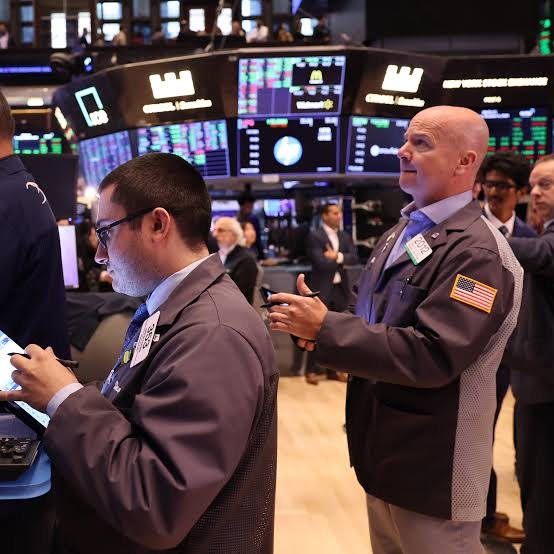
Here is something a lot of new investors underestimate: the Indian market often takes its cue from what happened overnight on Wall Street. If US indices like the Dow Jones or S&P 500 close sharply lower, there is a good chance the Nifty and Sensex will open under pressure the next morning. You can track those global benchmarks in near real time on platforms like Reuters Markets or Investing.com. This interconnectedness is exactly why the photo of traders on a global exchange floor is more relevant to your Mumbai-based portfolio than you might think.
Reading the Charts Without Losing Your Mind
Technical analysis can look intimidating, but the core idea is simple: prices tend to respect certain levels, and traders watch those levels closely. For the Nifty and Sensex, analysts constantly talk about “support” and “resistance.” Support is the price zone where buyers tend to step in and stop a fall. Resistance is the zone where selling pressure tends to cap a rise.
When the market is “consolidating,” it means the index is stuck in a range, bouncing between support and resistance without a clear breakout. That is roughly where we have found ourselves in several recent stretches, a market that is neither collapsing nor sprinting, just gathering its breath. For long-term investors, these consolidation phases are actually healthy. They shake out the impatient money and build a firmer base for the next move.
One indicator worth understanding is the India VIX, often called the “fear gauge.” When the VIX spikes, it signals that traders expect big swings ahead. A calm, low VIX usually accompanies steady markets. Watching this alongside the Nifty gives you a fuller picture than staring at the index number alone.
Sector Rotation: Where the Smart Money Seems to Be Moving
One of the more interesting dynamics in the current market is what analysts call “sector rotation.” Instead of every stock rising together, money keeps shifting from one theme to another. In recent phases, we have seen enthusiasm rotate through public sector banks, defence and railway stocks, renewable energy plays, and consumption names, each taking a turn in the spotlight.
For the Nifty and Sensex, this rotation matters because it can keep the headline index relatively stable even while the action underneath is fierce. A day where banking falls but IT and energy rise can leave the index roughly flat, hiding the drama happening at the stock level. This is exactly why looking beyond the top-line number is so important, the index is a summary, not the full story.
It is also why broad-market and mid-cap indices sometimes tell a different tale than the large-cap Sensex. When mid-caps and small-caps run hot while the Sensex stays calm, it often signals strong retail appetite for risk. When that reverses, it can be an early warning that caution is creeping back in.
The Retail Investor Revolution
Perhaps the single biggest structural change in the Indian market over the past few years is the arrival of the everyday retail investor at scale. Millions of new Demat accounts, the explosion of easy-to-use trading apps, and a cultural shift toward equity investing have transformed how the market behaves. The steady drip of SIP money into mutual funds now acts as a powerful stabilising force.
This is genuinely a big deal. In earlier decades, a wave of foreign selling could crater the Nifty and Sensex because there was not enough domestic buying to absorb it. Today, domestic institutional investors and retail SIPs frequently step in to buy exactly when foreigners are selling, softening the blows. It does not make the market crash-proof, nothing does, but it has changed the rhythm of how corrections unfold.
That said, I always urge a note of caution here. A rising market can make everyone feel like a genius. It is easy to mistake a bull run for personal skill. The real test of an investor comes not when the Nifty is climbing, but when it is falling and the headlines turn grim. Building that emotional discipline now, while things are relatively calm, pays off enormously later.
Risks Worth Keeping on Your Radar
No honest discussion of the current market is complete without talking about what could go wrong. I am not trying to scare anyone, I am simply a believer that informed investors sleep better. Here are the risks that deserve attention.
Valuation concerns. When indices trade at rich price-to-earnings multiples, there is less room for disappointment. Any earnings miss or global shock can trigger sharper corrections simply because expectations were already lofty.
Global interest rates and the dollar. If major central banks keep rates higher for longer, emerging markets like India can see money flow back toward safer, higher-yielding assets abroad. A strong dollar tends to be a headwind for the Nifty and Sensex.
Crude oil prices. India imports a large share of its oil, so a sustained spike in crude prices pressures inflation, the currency, and corporate margins all at once. It is one of the cleanest external risks to watch.
Geopolitical surprises. Conflicts, elections, and policy shocks anywhere in the world can send a jolt through global markets within hours. These are impossible to predict, which is exactly why diversification and a long horizon matter so much.
How Should an Ordinary Investor Respond?
I want to be very clear here: nothing in this article is personal financial advice, and you should always consult a qualified, registered financial adviser before making decisions with your money. What I can offer is a set of sensible, time-tested principles that tend to serve people well across market cycles.
First, do not try to time the exact top or bottom of the Nifty and Sensex. Even professionals with billion-rupee research budgets get this wrong regularly. Consistent, disciplined investing through ups and downs almost always beats frantic in-and-out trading for the average person.
Second, know why you own what you own. If you cannot explain in a sentence why a stock or fund belongs in your portfolio, that is a red flag. Understanding your holdings makes it far easier to hold your nerve when the market gets choppy.
Third, keep an emergency fund separate from your market money. The investors who get hurt most in downturns are often those forced to sell at the worst possible moment because they needed cash. A cushion of savings buys you the freedom to wait out storms rather than sell into them.
Finally, stay curious and keep learning. Markets reward those who understand what they are doing. If you want to keep up with the latest developments in business and the wider economy, our Business news section is a good place to check in regularly.
The Bigger Picture: Why India’s Story Still Excites
Step back from the daily noise for a moment, and the longer-term case for the Indian market remains compelling. A young population, a growing middle class, rising digital adoption, and continued reforms give the economy a structural tailwind that many developed markets simply do not have. This is a large part of why global investors keep coming back to India even after periods of selling.
None of this guarantees that the Nifty and Sensex go straight up, they absolutely will not. There will be corrections, scary headlines, and stretches where your portfolio feels stuck. But the multi-year direction of a growing economy, combined with the maturing behaviour of domestic investors, gives reason for measured optimism. The key word there is measured. Optimism without discipline is just gambling with extra steps.
It also helps to remember how far the market has come. Just a couple of decades ago, the idea of tens of millions of ordinary Indians tracking the Sensex on their phones during a lunch break would have seemed far-fetched. Today it is completely normal. That democratisation of investing is, in my view, one of the most quietly transformative financial stories of our time.
Final Thoughts
The current market, seen through the lens of the Nifty and Sensex, is a fascinating mix of strength and caution. Domestic flows are strong, corporate India is largely in decent shape, and structural tailwinds remain intact. At the same time, valuations are demanding, global risks are real, and volatility can show up without an invitation. That combination calls for engagement, not fear, and certainly not blind euphoria.
My honest takeaway is this: pay attention to the market, but do not let it own your emotions. Understand the forces moving the Nifty and Sensex, respect the risks, invest with a plan, and give your money the time it needs to work. The people who build real wealth in the stock market are rarely the ones chasing every tick on the screen. They are the patient ones who understood the game and stayed in it.
Markets will keep doing what markets do, surprising us, testing us, and occasionally rewarding us. Your job is not to predict every twist but to stay informed, stay disciplined, and keep showing up. If this piece helped you make a little more sense of where things stand, that is exactly what I hoped for. Here is to investing thoughtfully, and to staying calm no matter which way the Nifty and Sensex swing next.
Disclaimer: This article is for informational and educational purposes only and does not constitute investment advice. Stock market investments carry risk. Please consult a SEBI-registered financial adviser before making any investment decisions.