Editor’s note on sourcing: This analysis draws on widely documented and verifiable information about Narendra Modi’s tenure up to early 2025. Where we describe outcomes, we distinguish between verified facts, informed opinions, and contested political claims. Specific economic figures move constantly, so readers should confirm the very latest data against official sources such as the Reserve Bank of India, the Ministry of Statistics and Programme Implementation, and reputable news outlets before treating any number as current.
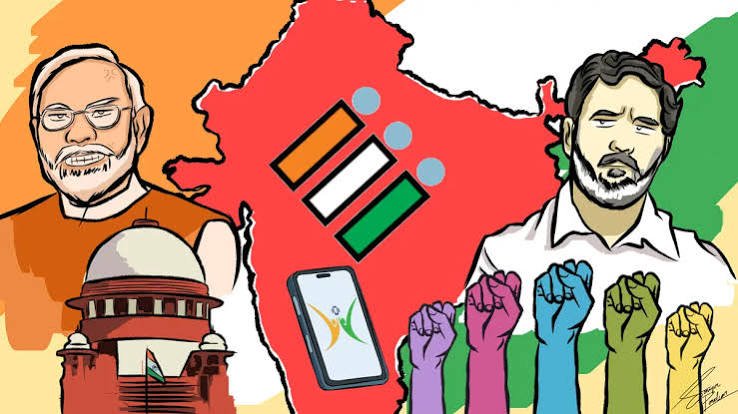
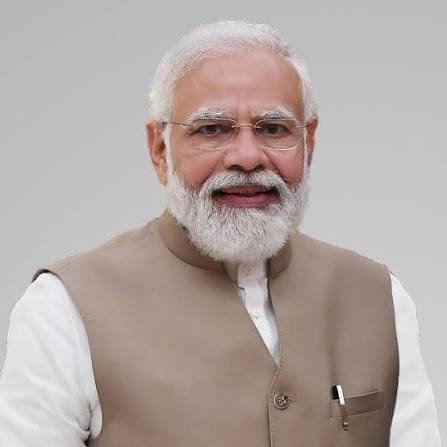
Few political figures in modern India have inspired as much admiration and as much criticism as Narendra Modi. Since becoming Prime Minister in 2014 and winning a second term in 2019, he has reshaped the country’s politics, its economic conversation, and its place on the world stage. Supporters see a decisive leader who modernised governance and lifted India’s global standing. Critics see concentration of power, uneven economic gains, and promises that outran delivery. A fair assessment has to hold both pictures in view at once, because the truth of a decade in power is rarely as tidy as either side suggests.
The rise and the mandate
Modi came to national office after a long stint as Chief Minister of Gujarat, campaigning in 2014 on a promise of development, jobs, and clean, efficient governance. The slogan of that era, “sabka saath, sabka vikas” (together with all, development for all), captured a message of aspiration that resonated widely, especially with younger voters frustrated by the previous government. His party won a decisive parliamentary majority, the first single-party majority in decades, which is a matter of record rather than interpretation.
That strong mandate is central to understanding his tenure. It gave the government room to pursue ambitious, sometimes disruptive reforms with fewer of the coalition constraints that had slowed earlier administrations. How you judge the use of that power is where opinion legitimately diverges.
Signature initiatives and their mixed record
Several flagship programmes define the Modi years. The Goods and Services Tax (GST), rolled out in 2017, replaced a tangle of state and central levies with a unified national tax (details are published on the official GST portal). Economists broadly agree the idea was sound and long overdue; the debate has centred on its complex multiple-rate structure and the difficulties smaller businesses faced adapting to it. That is a fair example of a reform whose intent is widely praised while its execution is genuinely contested.
Demonetisation in November 2016 remains the most polarising decision of his tenure. Overnight, high-value currency notes were withdrawn, with the stated aims of curbing black money, counterfeiting, and corruption. It is a verified fact that the move caused significant short-term disruption, particularly for cash-dependent workers and small traders. Whether it achieved its long-term goals is disputed: the government points to formalisation of the economy and a wider tax base, while many economists argue the costs outweighed measurable benefits. Here the honest position is that the evidence is mixed and the political claims on both sides outrun what the data conclusively shows.
On financial inclusion, the Jan Dhan Yojana opened hundreds of millions of bank accounts for previously unbanked citizens, and the broader “JAM” architecture (linking bank accounts, the Aadhaar identity system, and mobile numbers) enabled direct transfer of welfare benefits. This is one of the more concretely documented successes, credited with reducing leakage in subsidy delivery, though critics note that opening an account is not the same as meaningful, active financial participation.
The farm laws: promise, protest, and reversal
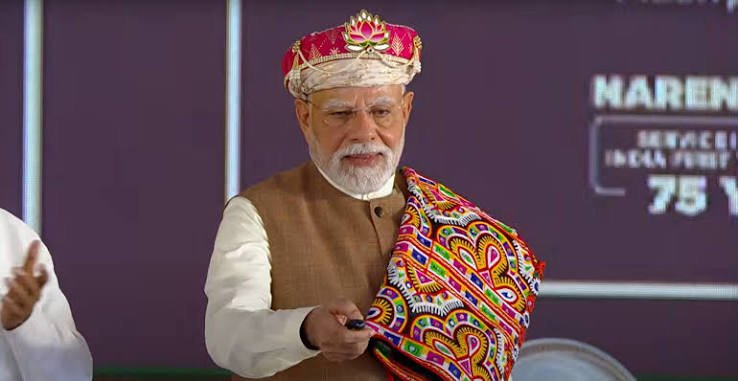
No episode better illustrates the tension between reform ambition and ground-level resistance than the three farm laws introduced in 2020. The government argued they would modernise agriculture, give farmers more freedom to sell outside regulated markets, and attract private investment. Many economists agreed Indian agriculture needed reform. Yet the laws triggered one of the largest and most sustained farmer protests in India’s history, concentrated among growers in Punjab, Haryana, and beyond, who feared the changes would erode guaranteed minimum support prices and leave them exposed to large buyers.
After more than a year of protests, the government repealed the laws in late 2021. This is a verified sequence of events, and it stands as a rare and significant reversal. Supporters framed the repeal as democratic responsiveness; critics framed it as evidence that the reforms had been pushed through without adequate consultation in the first place. Both readings contain truth. What is not in dispute is that the episode left deep questions about how agricultural reform should be pursued in a country where a large share of the population still depends on farming.
For farmers more broadly, the record is genuinely mixed. Programmes like PM-KISAN provided direct income support to millions of farming households, which is documented. At the same time, farm incomes, rural distress, and the long-promised goal of doubling farmers’ incomes remained subjects of ongoing debate, with critics arguing that structural problems in agriculture were not resolved. Anyone claiming a simple verdict here, positive or negative, is overstating what the evidence supports.
The economy: growth, jobs, and the distribution question
On the economy, the picture is layered. India remained one of the world’s fastest-growing major economies through much of the Modi period, and the government invested heavily in physical infrastructure: roads, railways, digital connectivity, and sanitation. The push on digital public infrastructure, including the widely used UPI payments system, is frequently cited even by neutral observers as a genuine achievement with real everyday impact.
The persistent criticism concerns jobs and distribution. Critics and several independent analyses through early 2025 argued that economic growth did not translate into enough quality employment for India’s young, expanding workforce, and that inequality widened even as headline output rose. Supporters counter that formalisation, welfare delivery, and infrastructure lay the groundwork for durable gains. The fairest summary is that aggregate growth was real, but the question of who benefited, and how evenly, remained the central and unresolved economic debate of his tenure. Because employment and inequality data are contested and frequently updated, current figures should be checked against official releases rather than assumed.
The COVID-19 pandemic complicates any economic scorecard. The 2020 lockdown was among the world’s strictest and caused severe hardship for migrant workers, a widely documented human cost. The government later rolled out large food-security and welfare measures, including free foodgrain distribution to hundreds of millions of people, which many credit with cushioning the poorest during the crisis. Both the hardship and the relief are part of the honest record.
The poor and low-income families
Welfare delivery is where the Modi government most consistently stakes its claim to helping the poor. Beyond Jan Dhan and PM-KISAN, initiatives provided cooking-gas connections to low-income households (many such schemes are catalogued on the government’s National Portal of India), built tens of millions of toilets under the Swachh Bharat sanitation drive, and expanded housing and health-insurance schemes. These programmes reached very large numbers of people, and that scale is documented.
Critics raise fair questions about depth versus breadth: whether a gas connection is used long-term, whether built toilets are maintained, whether insurance translates into accessible care. These are legitimate concerns about outcomes rather than announcements. The balanced view is that the delivery machinery genuinely improved and reached the poor at unprecedented scale, while the harder question of lasting quality-of-life change is where reasonable people disagree and where evidence is still being gathered.
Concentration of power and democratic concerns
Beyond economics, a significant strand of criticism concerns democratic norms. Opposition parties, press-freedom organisations, and some civil-society groups have argued over the years that the space for dissent narrowed, that institutions came under pressure, and that press and academic freedom faced strain. These are contested claims, strongly rejected by the government and its supporters, who point to regular elections, a vigorous opposition, and India’s continued status as the world’s largest democracy. Readers can review background on India’s political system via Encyclopædia Britannica. This is an area where it is especially important to separate documented incidents from broad political characterisation, and to acknowledge that assessments here are heavily shaped by political vantage point.
Promises and the gap critics point to
Every long tenure invites a reckoning with its own promises. Critics most often cite the pledge to create large numbers of jobs, the goal of doubling farmers’ incomes, and various targets around manufacturing and investment as areas where, in their view, delivery lagged the rhetoric. Supporters respond that many of these are long-horizon goals disrupted by a once-in-a-century pandemic, and that the foundations laid will pay off over time. Rather than declaring a winner, the responsible approach is to note the specific promises, acknowledge that some outcomes fell short of the stated ambition by early 2025, and recognise that judging the rest requires current data this article cannot fabricate.
A balanced final word
Narendra Modi’s tenure resists simple verdicts. He has been, by any measure, one of the most consequential Indian leaders of the modern era, driving reforms and welfare delivery at enormous scale while presiding over decisions that caused real disruption and drew serious criticism. The GST was bold but complex; demonetisation was dramatic but contested; welfare reached the poor at record scale but with open questions about depth; the economy grew but the benefits were unevenly shared; farm reform was attempted and then reversed under pressure.
The honest conclusion is that his record contains genuine achievements, genuine failures, and a large contested middle where the evidence is still being written. Readers seeking to form their own judgment are best served by consulting current, credible data and a range of sources rather than accepting any single narrative, celebratory or condemnatory, at face value.
Further reading: For more context, browse our politics coverage here on NewslyToday, and for official economic data see the Reserve Bank of India.