My grandmother used to talk about buying a kilogram of onions for two rupees. I thought she was exaggerating until I actually looked it up. She wasn’t. Onions that cost ₹2 in the 1970s cost ₹40–60 today. That difference that slow, relentless rise in the price of everything — is inflation.
Most people know the word. Far fewer understand what actually drives it, why the government seems unable to stop it, and what it quietly does to their savings, their loans, and their daily budget. This article covers all of that — plainly, without the economics-textbook version that nobody finishes reading.
What is Inflation, Actually?
Inflation is the rate at which prices rise over time. Not just one price — everything. Groceries, rent, fuel, school fees, medicine. When inflation is at 6%, a ₹100 basket of goods costs ₹106 twelve months later.
The flip side of prices rising is that money loses value. The ₹10,000 sitting in your drawer today will buy you less next year than it does right now. Not dramatically less — but measurably less, every single year, without exception.
This is why the finance minister of india mentions inflation in almost every budget speech. It is why the Reserve Bank of India adjusts interest rates. It is why the stock market reacts violently to inflation data.
Why Does Inflation Happen?
There is no single cause. In practice, inflation is usually several things happening at once.
Production costs going up. When fuel prices rise, transportation costs rise. When transportation costs rise, everything that needs to be moved — which is almost everything — gets more expensive. This kind of inflation is called cost-push inflation, and it hurts because it happens even when people aren’t spending recklessly.
Supply chain disruptions. The COVID pandemic made this visible in a way that hadn’t been seen in generations. When ships couldn’t dock, factories couldn’t operate, and borders closed, goods became scarce and prices shot up — across the world simultaneously.
How Inflation is Measured in India
The government uses two main indices:
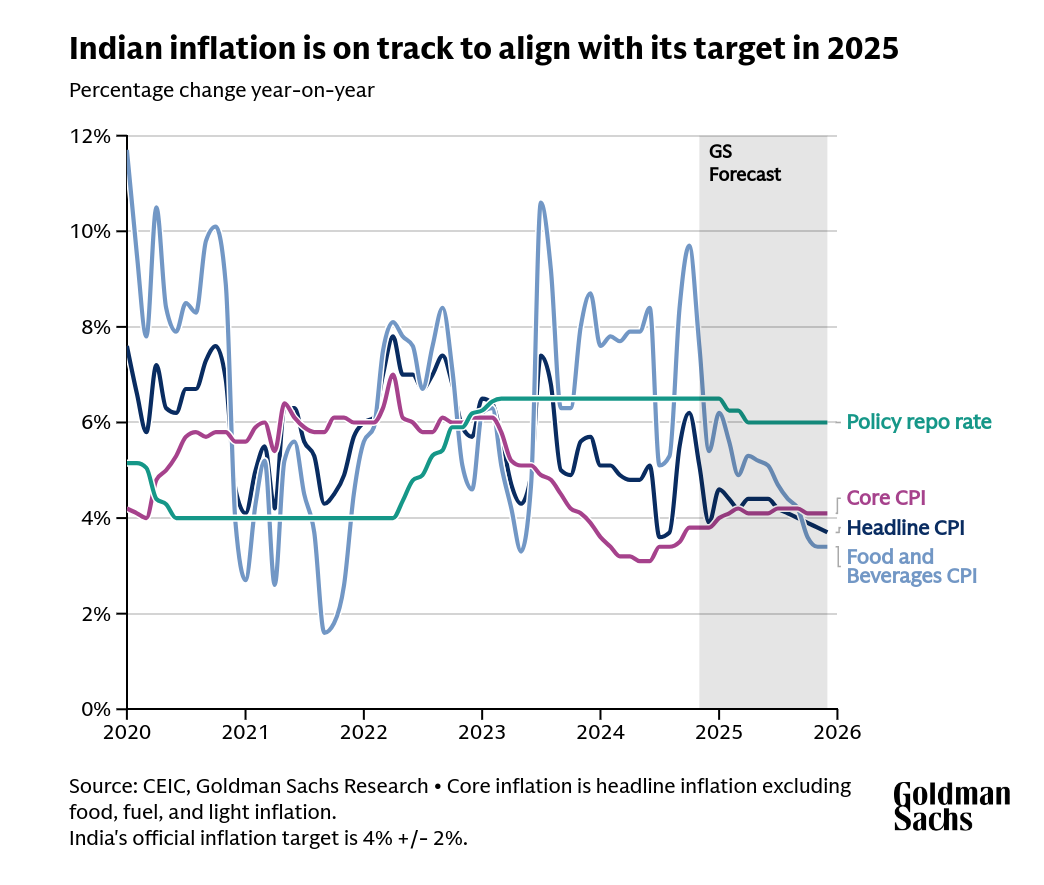
CPI (Consumer Price Index) measures the price change of a basket of goods and services that a typical household buys — food, clothing, housing, fuel, healthcare. This is the number that affects ordinary people most directly. The finance department and the RBI target CPI inflation at around 4%, with a tolerance band of 2% on either side.
When inflation is reported in the news or on platforms like investing com or yahoo finance, it’s almost always CPI being referenced.
How Inflation Hits Your Daily Life
This is where most people stop reading — because nobody wants to think about it. But this is the part that actually matters.
Your Savings
This is why financial advisors push people toward investments that beat inflation — equities, real estate, gold — rather than letting money sit idle. Platforms like google finance and yahoo finance track these markets precisely because staying informed is part of staying ahead of inflation.
Your Loans and EMIs
The bajaj finance customer care number sees more calls during rate-hike cycles, typically from borrowers asking about EMI restructuring. If you’re a customer, logging in via bajaj finance login will show your updated EMI schedule after any rate revision.
Your Investments
Every asset class behaves differently under inflation:
Gold: Traditionally India’s inflation hedge. Muthoot finance gold loan business — part of muthoot finance limited — gives you a sense of how intertwined gold and household finance are in India. When inflation spikes and people need liquidity, gold loans from lenders like muthoot finance near me and manappuram finance see sharp increases in demand. The muthoot finance share price and manappuram finance share price often climb during high-inflation periods for exactly this reason. Manappuram finance limited (also referred to as manappuram finance ltd or mannapuram finance share by retail investors) remains one of the most prominent gold lending franchises outside of banks.
How the Finance Sector Responds to Inflation
Chola finance (part of Cholamandalam) and cholamandalam finance — formally cholamandalam investment and finance company limited — are major players in vehicle and home loans. Their performance during inflation cycles tells you a lot about rural and semi-urban financial health.
Shriram finance limited and shriram finance share price are important indicators for the commercial vehicle financing segment. When fuel costs rise and freight rates lag, truckers under stress tend to default on vehicle loans — which is why shriram finance share gets watched carefully during high-inflation periods. Shriram finance has built a significant rural lending franchise that serves as a barometer for how inflation affects India’s non-urban economy.
Hdb finance — the retail lending arm of HDFC Bank — and hdb finance customer care number handle a large portion of consumer lending. Their loan book quality under inflationary stress is of interest to anyone following consumer finance in India.
Other names frequently discussed in the context of India’s credit market: piramal finance, hinduja finance, hinduja leyland finance, mahindra finance, sundaram finance, aditya birla finance, dmi finance, chola finance, and manba finance. Each has its own segment — vehicle loans, personal loans, MSME lending, gold loans — and each is exposed to inflation through some combination of funding costs, credit quality, and demand for borrowing.
The dmi finance app and similar digital lending platforms have made credit more accessible, but faster access to credit during high-inflation periods also means faster accumulation of stress if borrowers can’t keep up with rising EMIs.
Using Finance Platforms to Track Inflation’s Impact
If you want to understand how inflation is flowing through markets and companies in real time, here are the tools worth using:
Yahoo Finance and Google Finance give you stock prices, earnings data, and news for every listed company mentioned in this article — from bajaj finance limited and bajaj housing finance to muthoot finance share, manappuram finance share, and shriram finance share price.
Investing.com tracks world market live, us market live, world markets today, and Indian market data simultaneously. It’s one of the better platforms for watching how global inflation trends ripple into domestic markets. During US Federal Reserve rate decisions, the us stock market today reaction on Investing.com is often the first signal of how Indian markets will open the next morning.
Google Finance and google stock data are useful for quick price checks, but for deeper analysis — charts, ratios, sector comparisons — Investing.com or NSE/BSE’s own sites give you more. Tracking l&t finance share price, shriram finance share price, and ujjivan finance share price alongside broader market today data gives you a clearer picture of how the lending sector is positioned.
NSE India and BSE India are the primary exchanges. Bajaj housing finance share price nse today and bajaj housing finance share price nse data both come from here — these are the official, real-time numbers.
For state treasury operations and government finance data, portals like mptreasury (Madhya Pradesh), hrtreasury (Haryana), and cs haryana (Chandigarh secretariat) handle public finance tracking at the state level. These are relevant when studying how inflation affects government expenditure and public borrowing at the state level.
LIC Housing Finance login — or lic housing finance login — lets existing borrowers track their outstanding loan, download statements, and see updated EMI schedules after rate revisions. Lic housing finance ltd and lic housing finance share price are both important to watch when RBI adjusts rates, since LIC Housing is one of the largest mortgage lenders in the country.
What the Government Does About Inflation
The finance minister of india and the Reserve Bank of India have two main tools.
Monetary policy: The RBI raises or lowers interest rates. Higher rates make borrowing expensive, which reduces spending, which reduces demand, which brings prices down. It works — but slowly, and with side effects. Every rate hike makes home loans from lic housing finance, vehicle loans from cholamandalam finance, and personal loans from bajaj finance more expensive for ordinary borrowers.
Fiscal policy: The government can cut spending, reduce import duties on scarce goods, or release strategic reserves (like the government releasing onions and pulses from buffer stocks). These are less predictable in their impact but can be effective for specific supply-side price spikes.
The finance minister has the job of balancing both — managing inflation without killing growth, keeping markets stable while not burdening citizens with excessive costs. Market news out of New Delhi around budget season always moves the stock market significantly because investors are reading for how the government plans to handle this balance.
The indian railway finance corporation plays a specific role here — it funds railway infrastructure, and railway connectivity directly affects the cost of moving goods, which feeds into inflation through logistics costs.
Crypto and Inflation — A Side Note
It’s worth mentioning briefly because a lot of younger investors have turned to assets like Bitcoin as an inflation hedge, similar to how older generations turned to gold. The argument is that Bitcoin’s fixed supply makes it inflation-resistant in theory.
In practice, the 2022 experience showed that crypto crashed alongside equities when the US raised interest rates aggressively — which was not what a true inflation hedge should do. Gold held its value better. That doesn’t mean crypto has no role in a portfolio, but its inflation-hedging credentials are still being tested in real market conditions.
What You Can Actually Do About Inflation
Here is the practical bit, since understanding inflation is only useful if it changes how you make decisions.
Don’t let savings sit idle. A savings account at 3–4% in a 6% inflation environment is a guaranteed slow loss. Move excess savings into instruments that can beat inflation — equity mutual funds over long horizons, high-quality debt funds with floating rates in the short term, or gold for a small hedge.
Review your loan structure. If you have variable-rate loans — from bajaj finance, shriram finance, lic housing finance, or anywhere else — check whether a fixed rate makes sense for your situation. Speak to a financial advisor before switching, but don’t ignore the option.
Watch the bajaj finance app and your lender’s app for rate revision notices. Most NBFCs and banks communicate EMI changes through their apps now. The bajaj finance app, lic housing finance login, and dmi finance app all send notifications when your loan terms change.
Diversify your investments. Not into everything at once, but across asset classes. Equities for long-term growth. Gold for a hedge. Real estate if you can afford it. This isn’t new advice — it’s just more important during high-inflation periods.
Track market sentiment. Platforms like Investing.com show the crypto fear and greed equivalent for broader markets. Watching us market today and world markets today gives you early signals before Indian markets react. The market today section on NSE’s website shows what sectors are under pressure on any given day.
Use the right apps. Beyond your bank’s app, platforms like Groww, Zerodha, and Kuvera let you track your portfolio against inflation-adjusted returns. Yahoo finance and google finance are useful for checking individual stock performance — everything from muthoot finance share price and bajaj finance share price to jio finance share price and jio finance share.
Jio finance — part of the Reliance ecosystem — is a relatively newer entrant into the financial services space, and jio finance share has been closely watched since it separated from Jio Financial Services Ltd. Jio finance share price movements are often tied to broader Reliance news rather than pure financial sector dynamics, but it’s a name increasingly present in discussions about India’s financial sector evolution.
The Bigger Picture
Inflation is not a crisis you survive once and it’s over. It’s a permanent feature of how economies work. Some years it’s mild — 3–4% and barely noticeable. Other years, like 2021–22 globally, it runs hot and starts genuinely affecting household budgets.
The finance sector — banks, NBFCs, housing finance companies, gold loan providers — is the nervous system through which inflation’s effects travel into everyday life. When bajaj finance share price falls, it often means credit is tightening. When muthoot finance share price rises, it often means people are under stress and turning to gold loans for liquidity. When au small finance bank share price and equitas small finance bank are under pressure, it tells you that the bottom of the economic pyramid is feeling the squeeze.
Understanding these connections doesn’t require a finance degree. It just requires paying attention.
The finance minister, the RBI, and the finance department will handle the big policy levers. Your job is to make sure inflation doesn’t quietly eat your savings, inflate your debt burden, or catch you off guard.
Check your portfolio. Revisit your loans. Track the market today. And if you’re watching us market today or world market live for signals — you’re already ahead of most people.
Frequently Asked Questions
What is inflation in simple terms? When the same amount of money buys less than it did before. Prices rise, purchasing power falls.
Is inflation always bad? No. Mild inflation — around 2–4% — is considered healthy for an economy. It encourages spending and investment rather than hoarding cash. The problems start when inflation runs too high for too long.
How does inflation affect the stock market? In the short term, high inflation usually hurts stocks because it leads to interest rate hikes. In the long term, companies with strong pricing power tend to grow through inflationary periods. Tracking market news and market today updates helps you separate short-term noise from longer-term trends.
Which investments protect against inflation? Historically: equity, real estate, and gold. Gold loan companies like muthoot finance and manappuram finance limited actually benefit from inflation because gold demand rises when people need liquidity. Equities with pricing power outperform over long horizons.
How do I track inflation data in India? The Ministry of Statistics releases CPI data monthly. Google finance, yahoo finance, and investing com all carry the data alongside market reactions when it’s published.
What does the finance minister do about inflation? The finance minister of india uses fiscal tools — adjusting government spending, import duties, and supply management — while coordinating with the RBI, which handles interest rates through monetary policy.
This article is for educational and informational purposes only. It does not constitute investment or financial advice. Please consult a certified financial advisor before making investment decisions.