
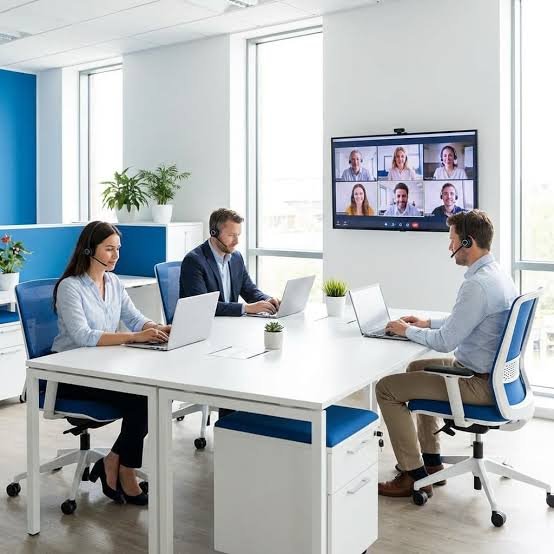
For a growing share of the workforce, “going into the office” no longer means driving across town or squeezing onto a crowded train. It might mean walking to a spare bedroom, a co-working space three blocks from home, or simply opening a laptop at the kitchen table. What started as an emergency arrangement during a global disruption has settled into something far more permanent: a fundamentally different relationship between people and where they get their work done.
Companies that once insisted remote work was a temporary compromise are now building entire strategies around it, rethinking real estate, management style, and even how they measure productivity. This isn’t a story about whether remote work “won.” It’s a story about how the office itself is being redefined.
What Remote Work Looks Like in 2026
Remote work today rarely means a single employee working alone from home five days a week. It’s more likely to describe a spectrum, ranging from fully distributed teams that never share a physical space to hybrid arrangements where employees split time between home and a shared office. What ties these models together is flexibility: the assumption that where work happens matters far less than whether it gets done well.
Why Companies Are Rethinking the Office
Several forces are pushing organizations to reconsider their relationship with physical office space, and none of them are purely about employee preference.
Cost Savings
Leasing, maintaining, and staffing a large office is expensive. Many companies have downsized their real estate footprint significantly, redirecting that budget toward technology, benefits, or simply improving margins.
Talent Without Borders
When a role doesn’t require a specific commute, companies can hire based on skill rather than proximity. This has opened doors for smaller cities and regions that were previously overlooked by employers concentrated in major metro areas.
Employee Expectations Have Shifted
Flexibility has moved from a nice-to-have to a baseline expectation for a large portion of job seekers, particularly those balancing caregiving responsibilities, long commutes, or health considerations.
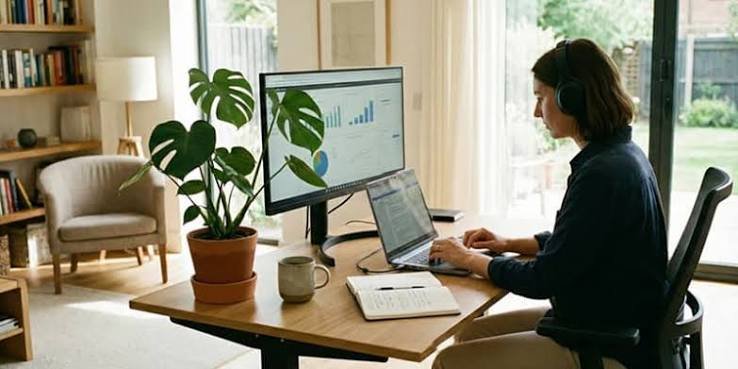
The Rise of Hybrid Models
Rather than choosing between fully remote and fully in-person, most organizations have settled somewhere in between.
- Anchor days: teams come in on specific, coordinated days for collaboration and planning
- Core hours: flexible start and end times with an agreed overlap window for meetings
- Hub-and-spoke offices: smaller regional offices replace one large headquarters
- Results-only arrangements: schedule and location are left entirely to the employee, with output as the only metric that matters
Technology Powering the Remote Workplace
None of this would be possible without a wave of workplace technology maturing at just the right time.
Collaboration Platforms
Video conferencing, shared documents, and messaging tools have become the connective tissue that replaces hallway conversations and impromptu desk visits.
Cloud Infrastructure
Cloud-based systems let employees access company files, software, and data securely from virtually anywhere, removing the need to be physically tied to a specific machine or office network.
AI-Assisted Productivity Tools
AI-powered tools now summarize meetings, draft routine communications, and help schedule across time zones, cutting down on the administrative overhead that used to eat into a distributed team’s day.
The Challenges Companies Are Still Solving
Remote and hybrid work aren’t without friction, and most organizations are still actively working through a handful of persistent challenges.
- Isolation and weaker social bonds among distributed team members
- Proximity bias, where in-office employees are unintentionally favored for visibility and promotions
- Cybersecurity risks tied to home networks and personal devices
- Difficulty preserving a cohesive company culture without shared physical space
Remote Work and Employee Wellbeing
Beyond the operational side, remote work has reshaped how people experience their jobs day to day, for better and occasionally for worse.
The Upsides
Eliminating a daily commute alone can free up hours each week, time that many employees redirect toward family, exercise, or simply more sleep. Surveys of remote workers consistently point to improved work-life balance as one of the most valued benefits of the arrangement.
The Downsides
At the same time, the boundary between work and personal life can blur when both happen in the same physical space. Some remote employees report working longer hours than they did in the office, simply because logging off never involves physically leaving a building.
How Companies Measure Productivity Without an Office
Without the ability to simply observe who’s at their desk, many organizations have shifted toward outcome-based evaluation rather than hours-based oversight.
- Clear, measurable goals set at the start of each work cycle rather than vague expectations
- Regular check-ins focused on progress and blockers rather than time logged
- Project management tools that make progress visible to the whole team, not just a manager
- Trust-based policies that avoid intrusive monitoring software, which research suggests can actually reduce morale and performance
Remote Work Around the World
Adoption looks noticeably different depending on where you are, shaped by local labor laws, housing costs, and cultural attitudes toward work.
North America
Hybrid arrangements dominate, with many large employers settling on two or three anchor days per week as a middle ground between flexibility and in-person collaboration.
Europe
Stronger worker protections in several countries have translated into formal rights to request remote arrangements, alongside growing conversations around a right to disconnect after working hours.
Asia-Pacific
Adoption varies widely by country, with some markets embracing distributed teams enthusiastically while others retain strong cultural expectations around visible, in-person work hours.
The common thread across regions is that remote work is no longer treated as an exception to be managed, but as a standing feature of how modern employment works.
How Real Estate Is Responding
Commercial real estate has had to adapt quickly to falling office occupancy in many markets. Some landlords are converting underused office towers into apartments or mixed-use spaces, while others are repositioning buildings as flexible, amenity-rich hubs designed to draw employees in voluntarily rather than by mandate. Co-working operators have also expanded into suburban and smaller markets, meeting demand from remote employees who want an occasional change of scenery without a long commute.
Tips for Managers Leading Distributed Teams
Managing a team you rarely see in person requires a different set of habits than traditional office management.
- Default to written documentation so decisions aren’t lost in verbal conversations only some team members witnessed
- Judge performance by outcomes and quality of work, not visible activity or response speed
- Rotate meeting times when working across multiple time zones so the same people aren’t always inconvenienced
- Create informal, optional spaces for casual conversation, since these don’t happen organically the way they do in a physical office
What This Means for Job Seekers
For anyone currently job hunting, remote flexibility has become a meaningful bargaining chip alongside salary and benefits. It’s worth asking specific questions during interviews rather than assuming: how often is in-office presence expected, is that likely to change, and how does the company evaluate remote employees for raises and promotions. Getting clear answers upfront can save considerable frustration down the line, since policies vary enormously even within the same industry.
How Employees Can Thrive While Working Remotely
- Set clear boundaries between work hours and personal time
- Invest in a dedicated, ergonomic workspace, even a small one
- Over-communicate progress and availability with your team
- Schedule regular video check-ins to maintain relationships, not just tasks
- Take real breaks away from screens throughout the day
Industries Leading (and Lagging) in Remote Adoption
Technology, finance, and professional services have embraced remote and hybrid arrangements more readily than industries like manufacturing, healthcare, and retail, where hands-on presence is often unavoidable. According to data tracked by the U.S. Bureau of Labor Statistics, the share of paid workdays performed from home has stabilized well above pre-pandemic levels across knowledge-based sectors, even as some companies continue pushing for a partial return to in-person work.
What the Future Office Might Look Like
The office of the future probably isn’t disappearing, but its purpose is shifting. Instead of being the default place where all work happens, it’s becoming a destination for the things that genuinely benefit from being in person: complex problem-solving, relationship-building, and onboarding new team members. Everything else increasingly happens wherever it makes the most sense for the person doing it.
Frequently Asked Questions
Is remote work still growing in 2026, or has it plateaued?
Growth has slowed compared to the initial surge, but adoption has largely stabilized at levels significantly higher than before, particularly in knowledge-based industries.
Do remote employees get promoted as often as in-office employees?
Studies have repeatedly flagged a visibility gap, sometimes called proximity bias, though many companies are actively adjusting review processes to counter it.
What is a hybrid work model?
It’s an arrangement where employees split their time between working remotely and working from a shared office space, often following a set schedule.
Are companies requiring employees to return to the office full-time?
Some organizations have pushed for partial or full return-to-office policies, though outcomes vary widely by industry, company size, and role.
How can remote teams maintain company culture?
Intentional practices, regular video check-ins, occasional in-person gatherings, and clear communication norms help distributed teams build cohesion without shared physical space.
Does remote work reduce a company’s carbon footprint?
Reduced commuting and smaller office footprints can lower emissions, though the effect is partially offset by increased home energy use, so the net impact varies by company and region.
What should I look for when negotiating a remote job offer?
Beyond salary, ask about home office stipends, expected core hours across time zones, and how performance reviews account for remote-specific circumstances.
Final Thoughts
Remote work in 2026 isn’t a temporary experiment anymore, it’s a structural shift in how organizations think about talent, space, and productivity. Companies that treat flexibility as a genuine strategic advantage, rather than a concession, are the ones best positioned to attract and retain strong teams going forward.
If you’re navigating these changes in your own workplace, explore more of our ongoing coverage of workplace trends and economic shifts in our Business section, and check back as we continue tracking how companies adapt in the years ahead.
About the Author
Business Desk, NewslyToday — covering workplace trends, economics, and industry shifts.